Trump as Jesus, and our fascination with psychological personality disorders
The dark triad of negative personality traits, which includes narcissism, gets a lot of airtime – but does it skew our view of humanity? Suzy Bashford learns about a contrasting measure, the light triad
By  Psychologies

Donald Trump posted an image likening himself to Jesus. If that doesn’t scream narcissism, what does? Yet amid the outrage, are we too obsessed with spotting darkness in others — and ourselves?
Besides the current political situation, Trump’s narcissism is visible in numerous, concrete ways: his ongoing attacks on the Pope for perceived slights, his desire to remake Washington in his own image with an “Arc de Trump” reportedly planned to be twice as high as the Lincoln Memorial, and his insistence that his name adorn buildings, hotels, and public spaces everywhere. These actions illustrate a personality that seeks admiration, dominance, and attention on a grand scale.
It’s tempting to dismiss these behaviours as political theatre or merely headline-grabbing. But it’s also shone the spotlight firmly back onto our fascination with the dark side of human nature. So what’s behind our obsession? Is it all just front-page titillation, or does it go deeper than mere entertainment?

The human obsession with darkness
An obsession with the dark side of life is part of human nature — just look at our endless appetite for crime dramas. Psychologists call this a negativity bias: a mental mechanism honed by evolution to scan for threats and keep our species alive. Only now, threats aren’t sabre-toothed tigers; they are other humans.
This may explain the flood of advice and quizzes aimed at exposing the “dark triad” in ourselves and others. Narcissism, psychopathy, and Machiavellianism dominate headlines: “Is there a narcissist in your life?” or “Ways to tell if your partner is a psychopath.” We check lists, quiz friends, and even examine our own impulses with suspicion. But have we gone too far, hunting the shadows while neglecting the light?
Spotlight on the light
Psychologist Scott Barry Kaufman believes so. He created the light triad, the first psychological research framework to measure positive traits alongside dark triad characteristics. Where darkness focuses on manipulation, selfishness, and exploitation, the light triad highlights the good in people:
- Faith in humanity: the assumption that people are generally good.
- Humanism: belief that all humans deserve respect and appreciation.
- Kantianism: treating others as ends in themselves, not means to our own ends.
“If we cultivate more light triad characteristics, they would add up to a far greater net positive in the world than the negative of the dark triad,” Kaufman says. “We really need more unconditional acceptance of each other and faith in fundamental human goodness because we live in a time of cynicism and callousness.”
Kaufman’s research strives to reveal and celebrate “everyday saints” who display these positive traits.
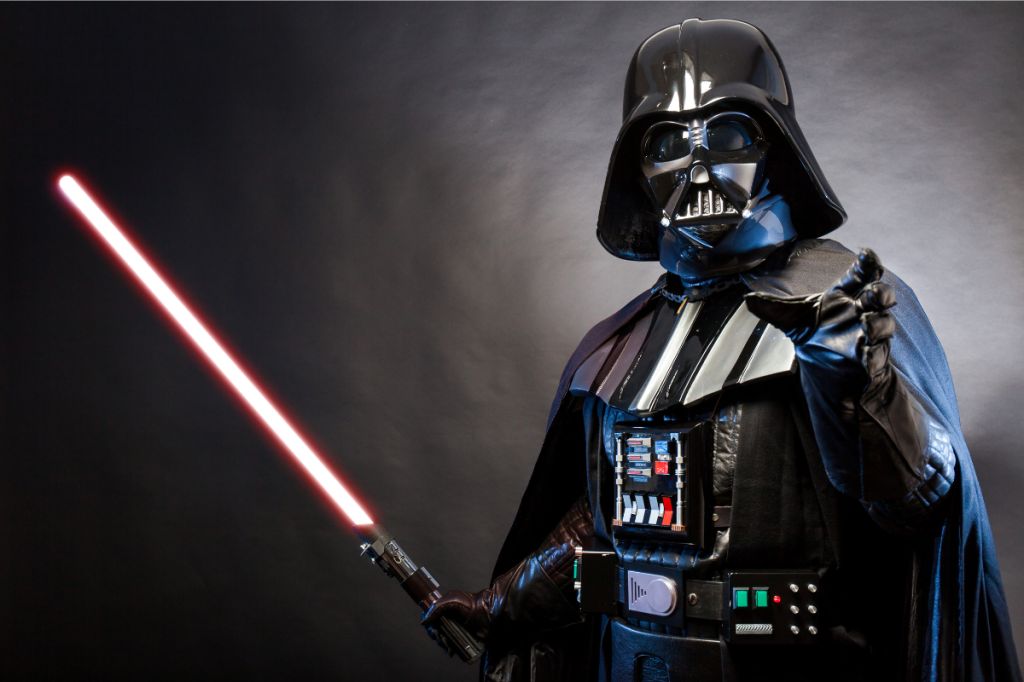
Taking the Test: Darth Vader or Luke Skywalker?
Kaufman measures these traits, plus dark triad characteristics, through an online test. Statements such as “I tend to see the best in people” measure faith in humanity, while “I tend to manipulate others to get my way” measures Machiavellianism. Testees answer honestly, relying on instinct rather than overthinking.
As I prepare to do the test, I feel nervous. The landing page shows a visual of two lightsabre-wielding characters — will I be more Darth Vader or Luke Skywalker? Initially, I breathe a sigh of relief when my result is revealed: 29% tilted to the light side. Phew! But then I think — 29% is not that light, is it? There’s clearly some dark in me too.
Kaufman explains it’s not about labeling someone as light or dark. “Being 100 per cent tipped to the light side is bad — life would be horrible for you. You’re going to be constantly exploited by everyone that you meet. It’s important to have a balance. Everyone has a mix of light and dark facets within them.”
Also, according to him, my high score for Machiavellianism (70%) isn’t necessarily a negative thing because you need strategies (a certain amount of planning, aka scheming) to navigate life’s twists and turns. If you have too much light, there’s a chance you’ll be seen as a doormat by others and it will be difficult for you to achieve your goals.
Shadows and self-reflection
A crucial point to remember is that these traits are not set in stone. Awareness allows for conscious growth. The test result message says: “You might want to use this information as an opportunity for self-reflection and growth.” Kaufman stresses that the goal is not self-flagellation but mindful change: “Figure out what kind of person you want to become in the world, and work towards that.”
In my case, now that I know my high Machiavellian score, I can observe my interactions and see whether my conversations become transactional — more about what people can do for me than genuine listening.
Kaufman notes that women have a tendency to worry unnecessarily about their behaviour, yet more women than men score highly on the light triad. “Women are more likely to have anxious ruminations about their behaviour but the research suggests many of them can take a deep breath and relax a little, because they are doing just fine!”

Hero or Villain?
The results are encouraging: most people tip toward the light side, and extreme malevolence is rare. Even in the darkest historical moments, there are reminders of human goodness. Anne Frank, in the face of unimaginable horror, wrote, “I still believe, in spite of everything, that people are truly good at heart.”
In an era of social media amplifying Trump’s messianic imagery and other narcissistic displays, Kaufman’s research asks us not just to focus on the darkness, but also to recognise everyday goodness.
Recognising our own mix of light and dark traits — and the same in others — offers a more balanced lens. We can study Trump’s messianic imagery and still remember that, as a species, we are capable of good. Sometimes, the brightest insights come when we stop staring at the shadows.